English
  عربى
عربى 
Previous Post
In today's digitally pervasive world, the time our eyes spend exposed to screen light is constantly increasing, leading to widespread eye strain, sleep disturbances, and decreased concentration. Blue light blocking glasses, a rapidly gaining popularity in recent years, have become a focus for many office workers, students, and creative professionals due to their significant attention to visual health.
The Invisible Light Pressure of the Screen Age
Among the light emitted by digital devices, short-wavelength blue light, due to its high energy density, is particularly stimulating to eye tissues. Prolonged exposure of the retina to this type of light puts the visual system under stress, causing eye discomfort, blurred vision, and decreased concentration. When people continue to be exposed to blue light at night, the regulation of the eye's circadian rhythm is disrupted, affecting melatonin secretion and making it difficult for the body to enter the sleep stage smoothly. Blue light blocking glasses were developed to reduce the optical stimulation to the eyes, providing a buffer for the visual system from its high stress levels.
The Real Mechanism of Blue Light Protection Lenses
Blue light protection glasses do not completely block light. Instead, they reduce the transmittance of specific wavelengths of blue light through the spectral reflection and absorption mechanisms of the lens material. This reduces the intensity of high-energy light entering the eyes, thus alleviating visual stress. The optical thin film structure on the lens surface disperses short-wavelength light of specific wavelengths, reducing direct stimulation of the retina. When the light becomes softer and more evenly distributed, the strain on the eye muscles is reduced, making eye use more comfortable and smooth.
Balance Between Visual Comfort and Color Reproduction
When choosing blue light protection glasses, people often worry that color distortion will affect the viewing experience. High-quality blue light protection lenses are designed with proportional adjustments to spectral filtering, keeping overall brightness and color as natural as possible, reducing the appearance of yellow or dark images. These lenses filter short-wavelength energy while retaining other wavelengths, preventing the visual system from experiencing new visual burdens due to color distortion during daily use. The more stable the optical transmittance of the lenses, the greater the comfort during prolonged use, and the better they are adapted to different scenarios such as reading, video viewing, and office design.
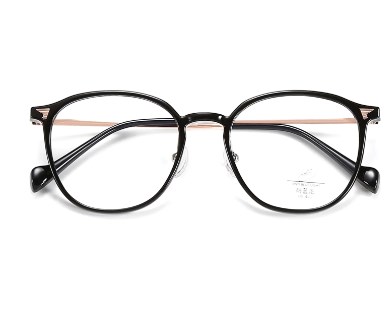
Health Benefits of Long-Term Eye Use: Prolonged exposure to large amounts of screen time keeps the ciliary muscles and optic nerves of the eyes in a state of constant tension. Blue light protection glasses buffer eye pressure, freeing the visual system from continuous stimulation by high-energy short-wavelength light, effectively reducing eye fatigue after prolonged use. When visual pressure is reduced, symptoms such as head tension, difficulty concentrating, and excessive light sensitivity at night also improve. Reducing unnecessary blue light stimulation at night helps maintain a stable circadian rhythm, improving sleep quality.
Advantages of Blue Light Protection Glasses in Everyday Scenarios: In office environments, the reflection and direct light from screens keep the optic nerves in a state of tension for extended periods. Wearing blue light protection glasses softens the screen display, making it easier for the eyes to maintain a stable focus. During tasks such as reading, drawing, and data processing, the softened light allows the visual system to remain relaxed and fluid, helping to extend the duration of focused work. When using devices at night, blue light filtering reduces the stimulation of strong light on the eyes, ensuring that nighttime reading does not disrupt sleep rhythms and allowing the body to relax more easily after device use.
How to choose more professional and suitable blue light protection glasses?
When choosing blue light protection glasses, the spectral filtering mechanism is one of the key factors. Lenses should be able to effectively filter high-energy short-wavelength light while maintaining balanced light transmission, ensuring a natural and soft visual experience. The higher the optical uniformity of the lens material, the less likely visual distortion or glare will occur during use. When the lenses undergo professional processing, their surface has higher anti-reflective properties, making the light entering the eyes more stable and soft. The stability of the frame also affects the experience during prolonged use; a lightweight and stable structure reduces pressure on the bridge of the nose and ears, making the eye protection process more comfortable.
As daily eye use continues to extend to digitalization, visual health will become a core issue that cannot be ignored in future life. Blue light protection glasses are not only eye protection tools but also visual buffers in the era of high-density screens. It creates a soft and stable visual environment for the eyes through optical filtering, helping modern people maintain a more comfortable, relaxed, and healthier state of vision during frequent use. With the continuous advancement of lens technology, blue light protection glasses will be further integrated into work, study, and life scenarios, becoming a basic visual accessory in the digital age.