English
  عربى
عربى 
Previous Post
As public awareness of vision health continues to grow, discussions about reading glasses have gradually expanded from traditional reading aids to areas closely related to visual science, optical technology, and quality of life. Reading glasses not only represent physiological compensation for aging but also symbolize a proactive way to maintain visual ability. In the context of today's fast-paced life, the demand for near vision is constantly increasing, thus re-evaluating the importance of reading glasses.
The Formation of Presbyopia and the Optical Significance of Reading Glasses
When the lens inside the eye gradually loses its elasticity, the eye becomes less flexible in adjusting near focus, and vision begins to appear blurred, fatigued, and unstable. This process is called presbyopia and is part of the natural process. The optical significance of reading glasses lies in adding a set of positive refractive power, allowing the eye to regain the ability to focus on near objects, thus making vision easier and more stable.
Reading glasses are designed according to the principle of optical balance, compensating for the decline in the eye's accommodative ability during near reading and reducing eye strain. A suitable optical prescription not only improves blurry text but also makes reading more natural, maintaining eye comfort during prolonged close-up work.
The Relationship Between the Optical Structure and Wearing Comfort of Reading Glasses
The core component of reading glasses is the lens. Its optical center, prescription accuracy, light transmittance, and lens material collectively determine the wearing experience. During close-up reading, deviations in the optical center can affect vision, making eye coordination difficult and causing soreness and fatigue. The optical design of reading glasses emphasizes center positioning and pupillary distance matching to ensure a stable light path, helping to maintain visual symmetry and harmony.
Regarding wearing comfort, lightweight lens materials are increasingly valued. Lightweight lenses reduce pressure on the bridge of the nose and ears, making prolonged use more comfortable. High-transmittance materials ensure clear text edges and stable contrast, keeping the reading image soft even in changing lighting conditions.
Coating technology also plays a crucial role in reading glasses. High-quality lens coatings reduce glare while improving light transmittance, resulting in a purer and more stable visual experience. When lens surfaces are properly treated, glare interference is significantly reduced, thus improving reading quality.
The Optical Challenges of the Digital Age and the New Positioning of Reading Glasses
Modern reading environments are no longer limited to printed texts; people are constantly exposed to mobile phones, tablets, and computer screens. The brightness and wavelength structure of digital light sources fluctuate, especially short-wavelength blue light, which provides additional stimulation to the optic nerve and ciliary muscle. In this context, the functions of traditional reading glasses are insufficient to meet vision protection needs.
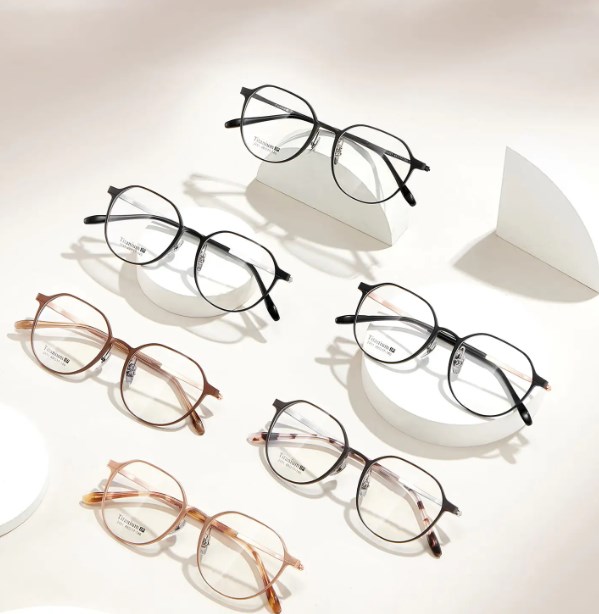
With the development of optical technology, modern reading glasses incorporate more digital scene adaptation technologies, enabling them not only to assist reading but also to reduce visual burden in screen lighting environments. Lenses with anti-glare functions can reduce the stimulation caused by screen reflections, making vision more stable. Appropriate filtering of higher-energy spectra helps improve comfort during long-term reading, allowing the eyes to remain relatively relaxed in digital environments.
Reading glasses in the digital age are transforming into "vision management tools," expanding from simple optical compensation to comprehensive assistance for visual health and lifestyle.
How to Choose the Right Reading Glasses in a Diverse Market
Choosing reading glasses requires considering optical accuracy, wearing comfort, and the intended use. A suitable optical prescription is fundamental; too high a prescription can cause pressure, while too low a prescription won't improve blurriness. The optical quality of the lenses determines image stability, while the fit of the frame affects comfort during extended wear.
People often overlook the importance of pupillary distance (PD) matching when choosing reading glasses. While PD mismatch may not cause immediate discomfort, it can lead to increased eye strain during prolonged close work, causing the eyes to unconsciously increase accommodation. Precise PD and optical center alignment are key to improving the reading experience over extended periods.
Different usage scenarios, such as close reading, computer work, and indoor daily activities, require different optical solutions. Modern reading glasses often offer different lens designs to meet these needs, allowing wearers to easily switch visual focus at different distances. This design provides a smoother visual experience during extended use.
As people place increasing importance on visual health, reading glasses are evolving from traditional reading aids into more advanced vision support devices. Future reading glasses may incorporate intelligent dimming technology, allowing the lenses to adjust their transparency in real time according to the lighting environment, ensuring adequate brightness for the eyes in various scenarios.
This evolution of reading glasses also symbolizes people's aspiration for a higher quality of life. A clear visual experience makes daily reading, work, and socializing more effortless, enriching life with detail and immersion. When vision diminishes due to presbyopia, a professional, comfortable, and high-quality pair of reading glasses can help the eyes regain ease and brightness.
In the future, reading glasses will not only continue to play a role in optical compensation but will also become a core component of visual health, accompanying people in maintaining clear vision in a more humane and technologically advanced way.